

Resilience = personal + societal flexibility
A wayfinding cairn for facilitating climate action

It was a bright spring day. The day before Earth Day. I pulled my bike from the garage and commuted to work. The first ride of the season always brings about a certain kind of joy. I was proud, too. Boastful, even, for choosing active transit over my gas-powered vehicle on this day-before-earth-day.
And then a truck pulled out in front of me.
I hit the driver’s side door and fell to the pavement - stunned.
I had my head up and my hands on the brakes, and so luckily, this truck-cyclist collision was just about the ‘best-case-scenario’ you could ask for if you’re going to have one.
And yet, in the aftermath, I feel … deflated. shook. embarrassed. dispirited.
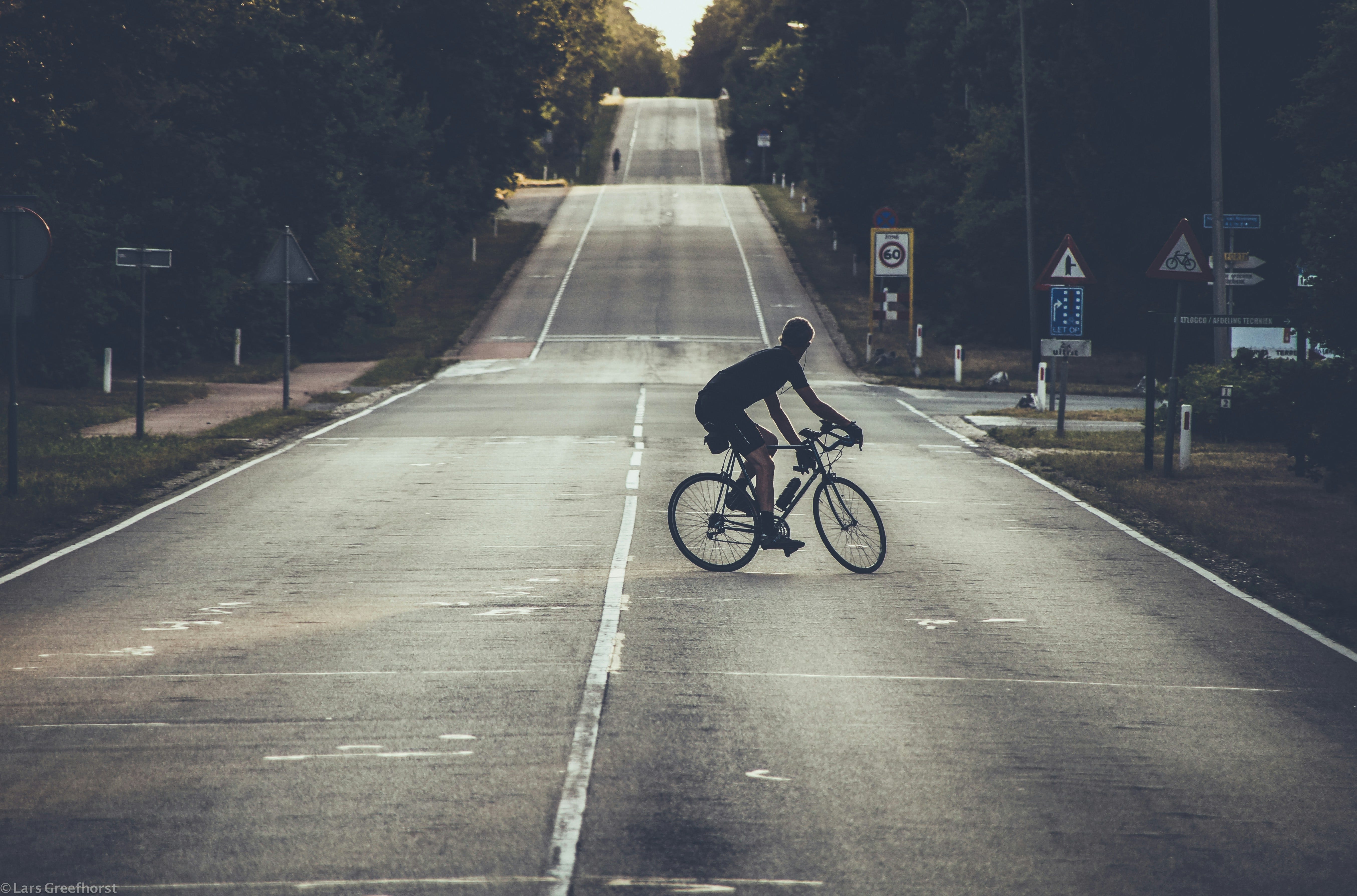
I feel alone on an open road not designed for me. The city infrastructure is not designed for cyclists, nor is the social infrastructure. Hate for cyclists here is actively visible on local social media pages. While the person who pulled out in front of me was not hostile in the moment, she was quick to blame me afterwards despite all the rules of the road stating otherwise. Apparently, the police even consoled her that she did everything right. (drivers: this means not looking both ways before entering a roadway - sound like a good idea?)
So, I’m learning how to literally get ‘back on the saddle’ knowing that I not only enjoy cycling and believe in my ability to bounce back from a setback, but also on the principle that have a right to safely engage in other forms of transportation than a gas burning vehicle. This involves both personal strength-building and contributing to community advocacy.
This has been a first-hand lesson in resilience.
Climate Action Cairns
Enter the start of a themed post series. I’m channeling all my frustrations and anger at the current situation focusing the energy on specific efforts - like the idea of Climate Action Cairns.
Cairns will be a series of articles offering straight-forward yet evidence-based guidance to facilitating climate action work. A cairn is a human-made trail marker, made as those who know the way leave behind an offering to the next hiker as if to say - “come on, this way”. On particularly open trails, cairns are like a beacon, sometimes big, other times, small, and always a welcome sign. You may pass them by quickly as you hike on your way, but the assurance is comforting - others have been here before and are guiding my way forward.
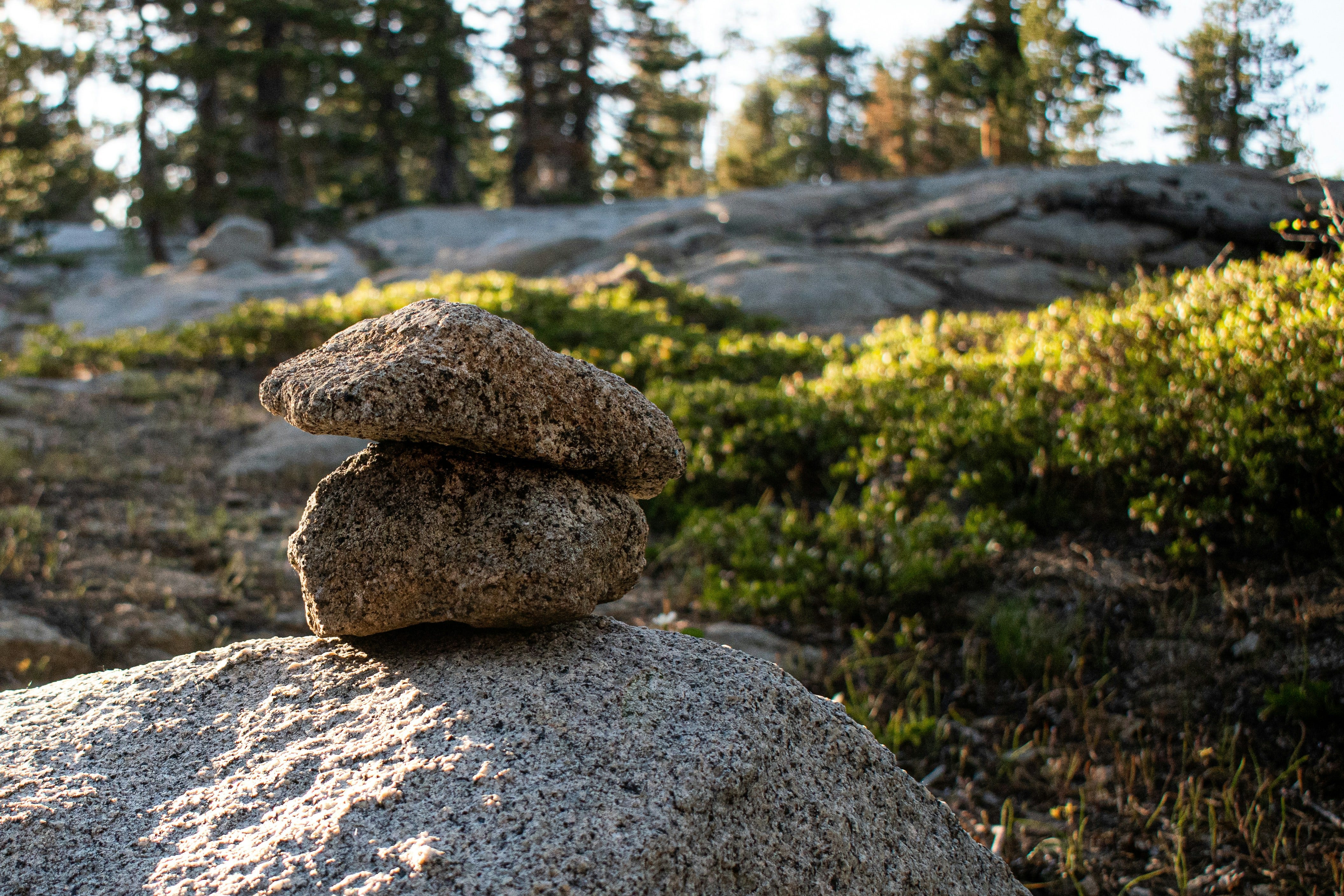
The intention of the Climate Action Cairns found here is that they can be a quick guide in engaging in your own climate action work. I find these are applicable both in my own self-guided development as a grounded climate actioner, and in guiding my facilitation of others. So, Climate Action Cairns may serve to inform:
self-directed engagement in climate action work
facilitation practices when engaging others in climate action focused activities, such as engaging learners, community members, youth, children, or families in climate action learning.

Resilience is a combination of cultivating personal flexibility and institutional, system change
The Need for Guidance
Facilitators can benefit from a cairn here because resilience is often presented as an individual’s responsibility. Here are a couple of examples:
APA: “The process and outcome of successfully adapting to difficult or challenging life experiences, especially through mental, emotional, and behavioral flexibility”
Mayo Clinic: “Resilience means being able to adapt to life’s misfortunes and setbacks”
As “resilience” gains momentum as a central concept in education, facilitators may be inclined to think of resilience as something we each develop a capacity for. This is evident in educational approaches that put emphasis on personal mental well-bring. However, this is a limited viewpoint with flaws - it sidelines discussion or critique of how greatly our own personal well-being is influenced (hindered or enabled) by societal and institutional conditions. As many climate-engaged folks come to know naturally, personal resilience is futile when the planet is burning. Broader, societal change becomes necessary.
Therefore, when facilitating ourselves and others through climate action work, we need a cairn that consistently points us back to a path of actively engaging resilience as a combination of both personal and systemic adaptability.
The Cairn
Rather than adopt definitions that limit resilience to personal qualities from the outset, consider definitions that recognize resilience as the capacity of both individuals and systems to adapt and grow in the face of turbulent change. For example, in a 2025 publication titled, View of Pedagogies of Resilience amidst a Planetary Crisis: From Mind Training to Social and Environmental Justice, Flores, Holme, and Fogarty state:
just as individuals can learn to become more psychologically flexible, the same goes for societies, which can always be organised otherwise—in ways that foster or undermine human well-being.
The paper also describes a range of facilitation techniques that foster resilience perspective-taking:
Students can benefit from exploring the growing field of mind training while also developing an understanding of system change via relevant social and political theories and practical knowledge of structure and agency, so that they can select skills from the resilience toolbox that work for them.
Facilitation Strategies and Resources
Facilitation strategies that engage this cairn, speak to both bio-psycho-social (personal well-being) and socio-ecological (social, institutional, systemic) forms of resilience. Here are two suggestions:
Ayana Elizabeth Johnson’s Climate Action Venn Diagram gets you thinking about three questions together: What are you good at? What work needs doing?, and What brings you joy? While questions of what you’re good at and what bring joy evoke personal well-being, this is met with considering which systemic changes align most closely with personal meaning and thriving.
Educators at Joseph Welsh Elementary School in Red Deer, Alberta, Canada, share an approach called the HOPE Wheel. They state, “The HOPE Wheel focuses on four domains of need: self, understanding, others, and community. Correlating to each domain (in order) are contexts of respect, understanding, relationships, and responsibility. Also correlated in order are four pillars of learning: learning to be, to know, to live peacefully, and to do”.


From my perspective as an educational developer, these resources are easily adapted to a range of contexts from personal engagement and self-guided professional development to classroom activities with learners from primary through to post-secondary levels to community engagement with non-profits, volunteer groups, and societies.
More on Substack
Two reads I recommend that inspired this post thanks to the eloquent ways the authors frame their critique of resilience:


A note on the cover image: The wood grain is a radial, section of a Sumach or Stag Horn, adapted from the work of Romeyn Beck Hough (1857 - 1924), who published his samples in The American Woods, a collection of more than 1000 paper-thin wood samples representing more than 350 varieties of North American tree collected between 1888–1913. Learn More.